
Pressure washing
How to Remove Oil Stains from a Driveway (Sydney Guide)
DIY methods that actually work for oil stains on Sydney concrete driveways — cat litter, dish soap, baking soda, degreasers — and when to skip ahead and call a pro.
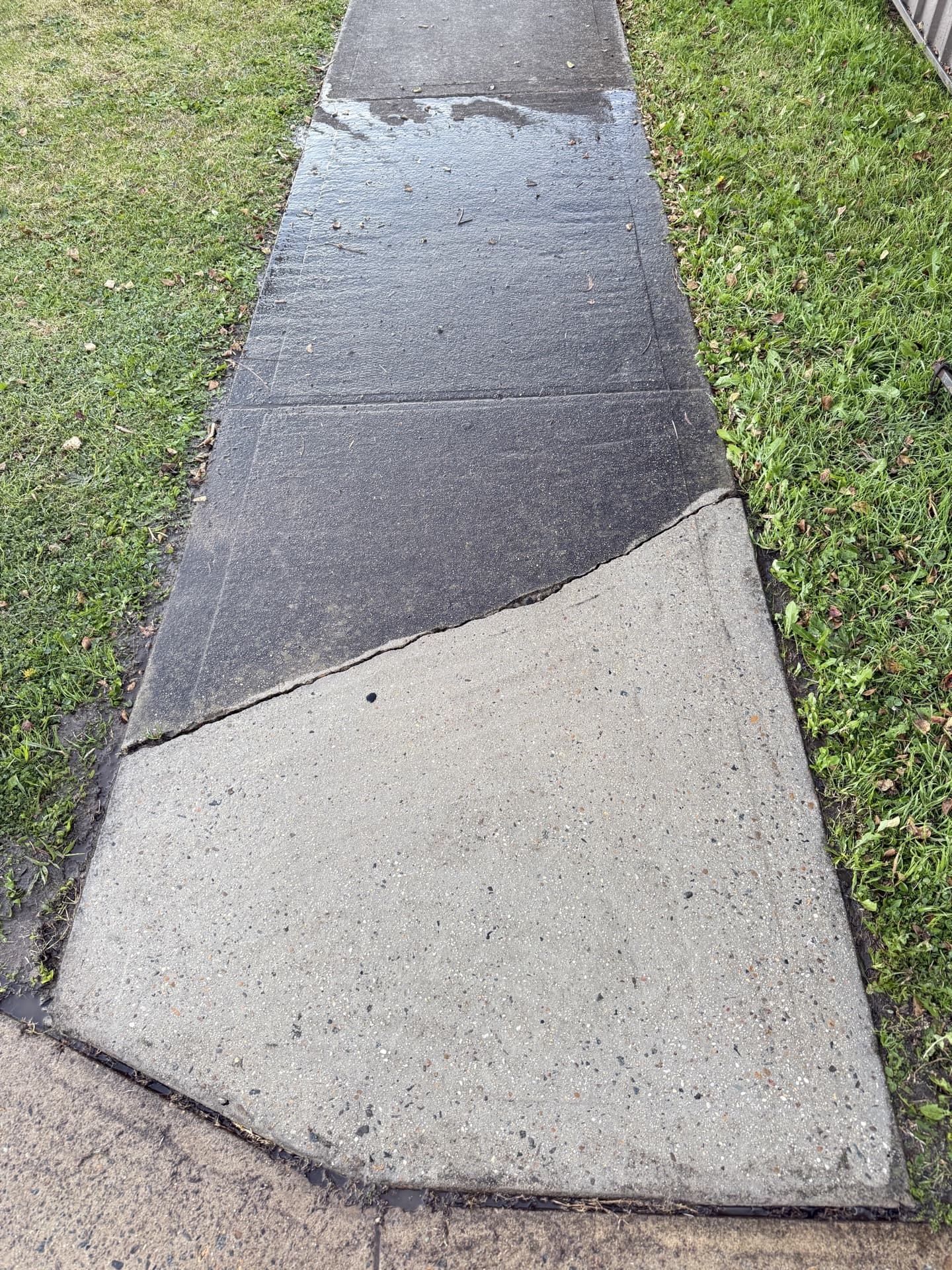
Oil stains on a concrete driveway are the single most common "before" photo we get sent. A leaky old car, a motorbike, a lawnmower refuel that went sideways — Sydney concrete is a sponge for hydrocarbons, and once they soak in they stain.
The good news: most fresh oil stains can be cleaned at home with stuff you already have. The bad news: deep, old or sealed-concrete stains are genuinely hard, and the wrong approach can spread the stain or etch the concrete.
Here's the order to try things.
First: how old is the stain?
This determines everything.
- Under 24 hours: absorb first, then clean. Easy.
- A few days to a week: absorb, dwell-treat with degreaser, then scrub.
- Months to years: you're past the easy methods. Skip to the pressure-wash section.
The longer oil sits, the further it migrates into the concrete pores. After about a year on unsealed concrete, the oil has soaked deep enough that surface cleaning won't reach it — you're cleaning the top millimetre while the stain leaches back up from the millimetres below.
Method 1: Absorb fresh oil with cat litter
For any oil stain less than a few days old, absorption is the first move. Don't pressure wash a fresh oil puddle — you'll just spread it across a wider area of concrete and now you've got a 2-metre stain instead of a 30 cm one.
What to do:
- Pour a generous layer of clay-based cat litter over the stain. Cheap supermarket litter is fine — you want the unscented clay kind, not the silica crystals.
- Press it down with your shoe so it's in contact with the concrete.
- Leave for 24 hours.
- Sweep up and bin.
Sawdust or sand work too but cat litter is the most absorbent. Skip the kitty-litter step for stains older than a week — the surface oil is already gone, the staining is in the concrete itself.
Method 2: Dish soap and hot water
For small, fresh-ish stains. Dish soap (the standard Morning Fresh / Palmolive type) is a surfactant — it lifts hydrocarbons off surfaces, which is why it works on greasy plates.
- Sweep the area clean.
- Squirt a generous amount of dish soap directly onto the stain.
- Pour a kettle of hot — not boiling — water over it.
- Scrub hard with a stiff-bristled brush. A deck brush from Bunnings works well.
- Rinse with the garden hose on jet setting.
Repeat 2–3 times if the stain is fading but not gone. This works on stains up to about 2–3 weeks old on unsealed concrete.
Method 3: Baking soda paste
For stains that have started to set in. Baking soda is mildly alkaline and slightly abrasive — it lifts oil residue while scrubbing the concrete surface.
- Make a thick paste of baking soda and water (consistency of toothpaste).
- Spread over the stain, 5–10 mm thick.
- Cover with cling film or a damp rag to slow drying.
- Leave 4–6 hours, ideally overnight.
- Scrub with a stiff brush, rinse with hot water.
Cheap, non-toxic, works surprisingly well on motor oil and cooking oil splatter (the latter being a common one for outdoor BBQ areas — a real issue in Hills District homes with built-in outdoor kitchens).
Method 4: Degreaser
For stains that resisted methods 1–3 or are clearly older than a month. A purpose-made concrete degreaser (Selleys, CRC, or any brand from Bunnings's automotive aisle) is alkaline and surfactant-loaded.
- Sweep clean and dampen the area.
- Apply degreaser per the bottle's directions — usually neat for stains, diluted for general cleaning.
- Dwell for 10–15 minutes. Don't let it dry out — re-wet if it starts to.
- Scrub hard with a stiff brush.
- Rinse thoroughly.
Eye protection and gloves. Don't let degreaser run off into garden beds — it'll kill plants. If it has to drain somewhere, drain it onto more concrete and rinse heavily.
Method 5: Poultice for old, set-in stains
This is the last DIY tier before calling someone. A poultice draws oil back out of the concrete pores using an absorbent material loaded with a solvent.
Recipe:
- Mix talcum powder, diatomaceous earth or baking soda with acetone (nail polish remover) until you have a thick paste.
- Apply 10 mm thick over the stain.
- Cover with plastic, tape down the edges.
- Leave 24–48 hours.
- Scrape off and rinse.
Works on stains older than 6 months, but it's slow and you might need 2–3 applications. Acetone is flammable — no smoking, no flames, ventilation if it's near a garage roller door.
When to call a pro
The honest cutoff: if the stain is older than 12 months, or covers more than half a square metre, or the concrete is sealed, you're probably wasting time on DIY.
The pro advantage isn't just chemicals — it's the gear. We covered cost ranges in our Sydney pressure washing pricing guide, but for oil stains specifically:
- Hot water at 80–95°C dissolves hydrocarbons that cold water won't touch. Domestic pressure washers are cold-only.
- Rotary surface cleaner treats the whole driveway evenly so you don't end up with a clean patch where the stain was and dirty concrete around it.
- Commercial-grade degreaser with longer dwell time and proper PPE.
- Re-treatment of resistant patches with a poultice while the crew is on site.
A typical full-driveway clean with oil stain treatment runs $179–$299 depending on size and severity — see our pressure washing service page for details. The rotary surface cleaner finish is the bit you can't replicate at home — it's the difference between "the stain is gone" and "the whole driveway looks like new concrete".
Sealed vs unsealed concrete
Sydney driveways are mostly unsealed concrete. If yours has been sealed (you'll know — water beads on the surface instead of soaking in), the rules change:
- Oil sits on top, doesn't soak in. Easier to remove.
- But: the wrong chemical can strip the sealer and leave a dull patch worse than the stain.
- Skip degreasers, stick with dish soap and absorption.
- Pressure washing must be done at lower pressure — high PSI strips sealant.
For sealed driveways with oil stains, just call us. We'll match the cleaning approach to the sealer and re-coat any patches that need it.
Climate notes — Sydney specifics
Sydney summer humidity slows the cleaning process. Degreasers and poultices that should dry in 4 hours in a dry climate stay wet for 8+ in February humidity, which actually helps with dwell time but means you can't walk on the driveway as soon.
Winter mornings — particularly inland west through Fairfield, Liverpool and Camden — are too cold for some chemicals to work properly. Save the deep stain treatment for autumn or spring.
The classic Sydney problem: oil stain plus algae growth around it from the shade of a parked car. The algae is the easier fix with a soft wash, but you usually need to treat both at the same time.
About XSCAPE Pressure & Lawn
XSCAPE is a Fairfield-based pressure washing crew servicing Sydney — Cabramatta, Liverpool, Parramatta, Hills District, Sutherland Shire and the Inner West. We use commercial hot-water units with rotary surface cleaners and we treat the chemistry side properly so the stain doesn't come back. Send a couple of photos via the quote form for a fixed price.
Get a quote
Need the work done? Get a fixed price in your inbox today.
Send through a few photos and we'll come back with a real number — not a “from” range.
Keep reading
More from the blog

Pressure Washing Cost Sydney: 2026 Price Guide
Real Sydney pressure washing prices — driveways from $179, full house exteriors from $299, decks per sqm. What drives the price up, and why the cheapest quote is usually the most expensive.

Soft Wash vs Pressure Wash: Which Does Your Home Need?
Pressure wash and soft wash are not the same job. Here's the PSI, the chemicals, the surfaces each one suits, and when picking the wrong method will cost you a render repair.

When to Mow Your Lawn in Sydney: Seasonal Guide
How often to mow buffalo, kikuyu and couch in Sydney across spring, summer, autumn and winter — including when to skip a cut entirely. Written by an actual Sydney lawn crew.